
From Pallets to Packets Automated Flow Orchestration Explained
Morning Rush, Meet Smarter Moves
I’ve watched a dock crew hit the floor before sunrise, coffee in hand, forklifts humming, orders stacking up like thunderclouds. In that rush, robotics software is often the quiet hand on the wheel, guiding tasks while folks keep moving. Teams swap spreadsheets for automated warehouse software, hoping to shave minutes off every pick and pack. The numbers say it should help—error rates drop double digits when tasks are orchestrated, and dock-to-stock can fall under an hour. But if the line still stalls at 10 a.m., what went sideways, and why does it keep happening?
Here’s the rub, y’all. The floor changes faster than the plan. A trailer is late. An AMR path gets blocked. A PLC gate times out. And the old way of “set it and forget it” can’t flex. So let’s pull back the curtain—funny how that works, right?—and see what really slows a good morning down before lunch rush kicks back in.
Where Old Playbooks Break Down
What’s really slowing things down?
Traditional WMS-led flows assume steady lanes and stable queues. That’s tidy, but real life is messy. Static routing treats every tote the same, even when priorities shift. Batch waves can stack work in the wrong bay. Device-level logic sits in silos—PLCs guard conveyors, AMR fleet controllers steer robots, and labelers do their own thing. When these parts don’t talk in real time, you get latency. Orders wait for the next cycle. Operators guess. And a tiny slowdown ripples across the shift. Look, it’s simpler than you think: if data can’t move faster than the loaders, the loaders lose.
The hidden pain points aren’t just “bugs.” They’re timing and context. Edge computing nodes go quiet during network jitter. API calls queue behind slow services. A pick face runs dry, but the system’s last update was five minutes ago. Without live signals—OPC-UA events from conveyors, AMR telemetry, scanner pings—your logic replays yesterday’s plan. Worse, integrations can be brittle. A small schema change breaks a flow. Folks patch it at 2 a.m., and the band-aid holds until peak. Then it pops. That’s why SLAs slip even when the dashboards look green. The orchestration isn’t wrong; it’s late.
Looking Ahead: Principles That Change the Game
What’s Next
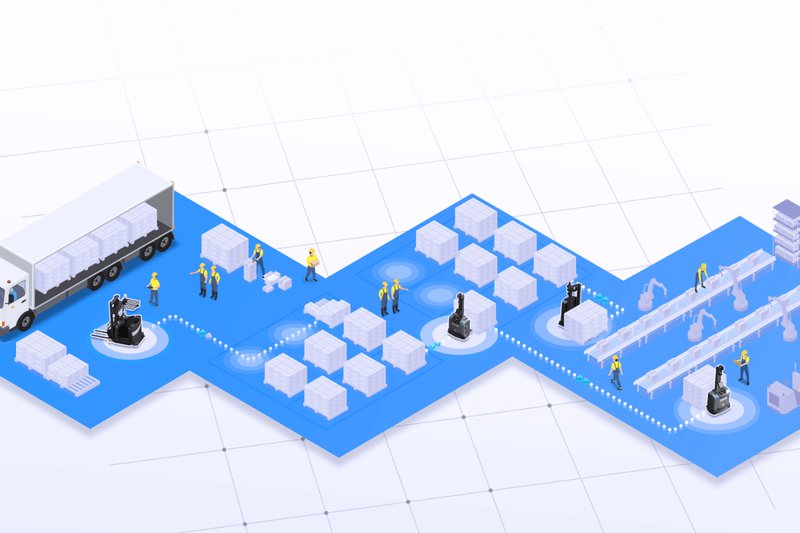
The shift is from fixed sequences to event-driven orchestration. Instead of “do A then B,” the system listens for signals and decides on the fly. Think of a graph scheduler that weighs queue depth, AMR battery levels, and aisle traffic, then assigns the next best job in milliseconds. Digital twins simulate congestion before it happens. Edge listeners filter noisy sensor data so only high-value events hit the core. And when a station trips, flows re-route without a meeting—no drama, just a new path. Compared with yesterday’s batch logic, this is a different rhythm: ask, decide, act, learn. Then repeat—fast.
In practice, modern automated warehouse software stitches together WMS orders, AMR fleet control, and device telemetry through resilient APIs. ROS 2 nodes publish real-time status. OPC-UA brokers unify PLC signals. A rules engine handles guardrails, while a policy layer tunes business goals (service levels, carrier cutoffs, energy use on power converters). You can measure it. P95 dispatch time drops from seconds to sub-second. Replan after a blockage goes from “call a lead” to “auto-recover.” And—this is the part folks love—operators see fewer surprises. Fewer rescans. Fewer stuck totes. The work feels smoother because the logic is listening as much as it’s telling.
If you’re weighing options, focus on three metrics to keep it honest. First, response latency: how fast does the system convert an event into a decision, end-to-end, under load. Second, adaptability: how many flows can be changed at runtime—without code deploys—and how quickly it re-routes when a node fails. Third, integration depth: native support for mixed fleets and protocols, plus how well it normalizes data across devices and apps. Score those, and you’ll see which platform scales on a real floor, not just in a slide deck—funny how the truth shows up in the stopwatch. For teams planning the next season, that’s your north star, and it’ll keep you out of weekend fire drills with SEER Robotics.